There's no single best energy drink that wins for everyone, and any site that ranks one "greenest" brand above all others is usually selling something. For a lower-waste household the better question isn't which name is best — it's what makes one can a smarter choice than another. Judge an energy drink the same way you'd judge any purchase in a green home: by its packaging, its ingredient list, and whether you actually need it. Get those right and the "best" one becomes obvious on the shelf in front of you.
The short answer up front: the best energy drink for a greener home is the one in a recyclable aluminium can, with a short, honest ingredient list and little or no added sugar — bought only when you genuinely need the lift, not out of habit. This guide walks through the criteria that decide it, so you can pick well anywhere without trusting a leafy label.
What makes an energy drink the "best" for a greener home
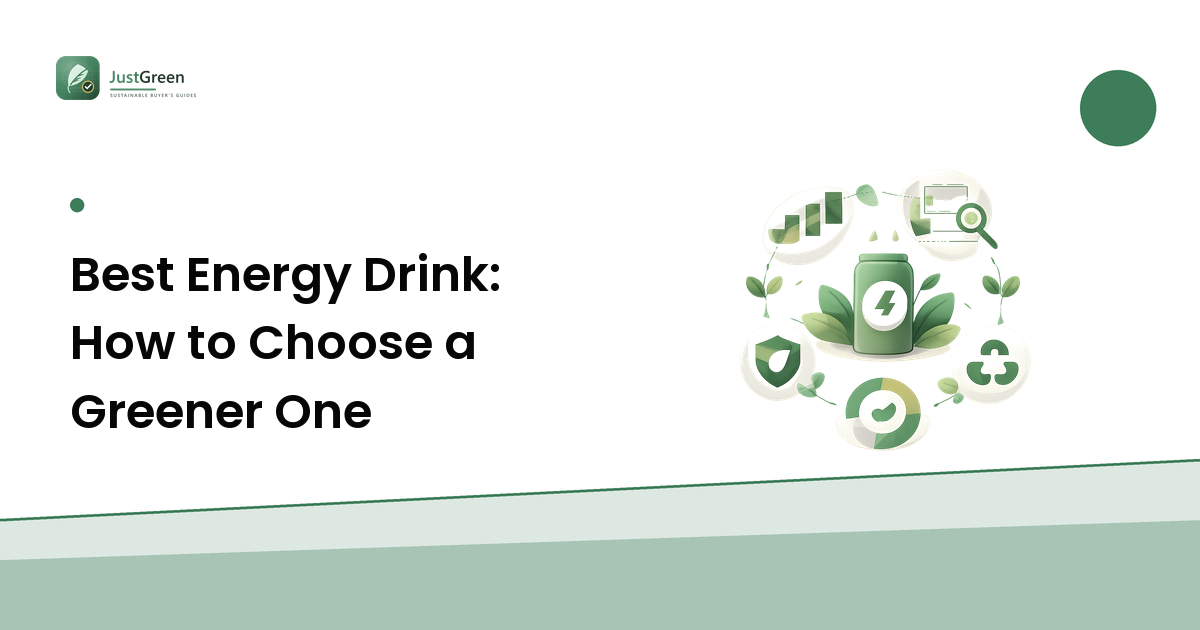
"Best" is only useful if you say best at what. For this audience it means the lowest-footprint option that still does the job, not the loudest marketing. Four criteria do almost all the work:
- Packaging you can actually recycle. This is the biggest environmental lever, because the can outlives the drink. Aluminium wins here (more on why below).
- A short, recognisable ingredient list. Fewer additives, sweeteners, and mystery "proprietary blends" generally means a cleaner product and simpler processing.
- Low or no added sugar. A high-sugar drink carries the footprint of all that sugar plus the health cost. Unsweetened or lightly sweetened versions usually score better on both.
- The right size, bought when needed. The greenest can is the one you don't buy on autopilot. A single sensible serving beats a fridge full of tall cans you drink because they're there.
Notice what's not on the list: brand claims like "natural energy," "clean," or a green colour scheme. Those are packaging design, not evidence. Read the label instead.
Aluminium can vs plastic bottle vs glass
Packaging is where an energy drink does most of its environmental damage or good, so it's worth understanding the real trade-offs rather than the marketing.
- Aluminium cans are the practical winner for most people. Aluminium is genuinely recyclable again and again without losing quality, it's collected almost everywhere, and it's light to ship. A rinsed can that reaches recycling is close to the best-case outcome for single-serve drinks.
- Plastic bottles are convenient and resealable, which suits a large drink you sip over hours. The honest downside: plastic is recycled at far lower real-world rates than aluminium, and much of it is downcycled rather than made into new bottles. If you choose plastic, a resealable bottle you finish beats two cans you don't.
- Glass is inert, endlessly recyclable, and refill-friendly, but it's heavy to transport and rare for energy drinks. It shines for at-home or refillable formats, less so for grab-and-go.
The plain ranking for a typical single serving: a recycled-and-recyclable aluminium can first, a bottle you'll genuinely finish and reseal second, and — whatever the format — never the one that ends up in general waste. The material only counts as "green" if it actually gets recycled, which is the part that's up to you.
Reading the label instead of the front of the can
The front of a can is advertising; the back is information. A few minutes reading the ingredient and nutrition panel tells you more than any slogan.
- Scan the sugar line first. Added sugar is the single biggest swing between two similar drinks. Sugar-free or lightly sweetened versions cut both the calories and the resources behind them.
- Count the ingredients. A short list of recognisable items beats a long one full of sweeteners, colours, and vague "blends." You don't need to fear every additive, but simpler is a reasonable tie-breaker.
- Check the caffeine amount, not just the word "energy." Knowing the actual milligrams lets you match the drink to what you need and avoid buying a bigger, stronger can than the job calls for.
- Treat certifications as a shortlist filter, not proof. A credible organic or fair-trade mark is a useful signal; a made-up "eco" badge with no standard behind it is just ink. When in doubt, the ingredient list doesn't lie.
If two cans are otherwise equal, the one with less sugar and fewer ingredients is the better buy — and usually the one you'll feel better after drinking.
What to do with the empty: recycling and waste
Buying the recyclable can only pays off if the can gets recycled, so the last step matters as much as the choice on the shelf. Rinse the empty so it doesn't contaminate other recyclables, don't crush it flat if your local system sorts by shape (a quick check of your area's rules settles this), and put it in the right stream rather than the bin. Aluminium that reaches recycling can be back on a shelf as a new can remarkably quickly — but only if it gets there.
Two habits make this reliable. Keep a small dedicated spot for rinsed cans so recycling isn't a decision each time, and learn your local rules once instead of guessing — "wishcycling" the wrong item into the bin can spoil a whole load. And if the honest answer is that you rarely finish the can, the greenest move is to buy fewer — reducing beats recycling every time.
The bigger picture: your home dwarfs your drink
Here's the perspective a no-greenwashing blog owes you: choosing a greener energy drink is a nice habit, but it's a rounding error next to how your home uses energy. If you care enough to weigh cans, the same attention aimed at heating, cooling, and hot water pays off many times over.
That's genuinely where "energy" matters most for the planet and your bills — a well-sealed, right-sized heating and cooling setup and good attic insulation move far more than any beverage choice. If you want the high-impact version of caring about energy, our energy-efficient home guide lays out where the waste actually hides and what's worth doing first. Pick the greener can and seal the drafty window; only one of them changes your footprint in a way you can measure.
FAQ
How do you pronounce "energy"?
"Energy" is said EN-er-jee — three syllables, stress on the first, a soft g like the g in "gee." It comes from the Greek energeia, meaning activity or operation, which is a fitting root for both a drink that promises a lift and the electricity that runs your home.
How do you pronounce "waste"?
"Waste" rhymes with "taste" and "paste" — one syllable, a long a, said wayst. Worth remembering, because in a green home reducing waste (the stuff you throw out) is the goal, and the word shows up constantly once you start paying attention to packaging.
How do I find the best local waste and recycling service?
Recycling rules are set locally, so the reliable route is to search your town's name plus "recycling" or "waste" — for example "waste New Braunfels" or "recycling [your city]" — and use the official municipal or county page rather than a random blog. That tells you exactly which materials your area takes, whether cans should be rinsed or crushed, and where drop-off points are. Local rules beat general advice every time.
Is a sugar-free energy drink really the better choice?
Usually, on both footprint and health, since added sugar carries real resource cost and calories. The caveat is honesty: sugar-free versions use sweeteners some people prefer to avoid. Read the panel and pick what fits you — the point is to choose deliberately, not to follow a badge.
What's the best heating and cooling or attic insulation choice — and why is it in an energy article?
Because that's where "energy" actually counts. There's no universal best system or insulation type — it depends on your climate, home, and budget — but sealing drafts and adding attic insulation are consistently among the highest-impact energy moves, far bigger than any drink. Our energy-efficient home guide walks through how to choose without overspending.
Next step
The best energy drink for a greener home isn't a brand you memorise — it's a habit: reach for the recyclable can with the shortest ingredient list and least sugar, buy it only when you need it, and actually recycle the empty. Do that, then put the real energy effort where it moves the needle at home. For more practical, no-greenwashing ways to green your home one change at a time, visit Just Green.