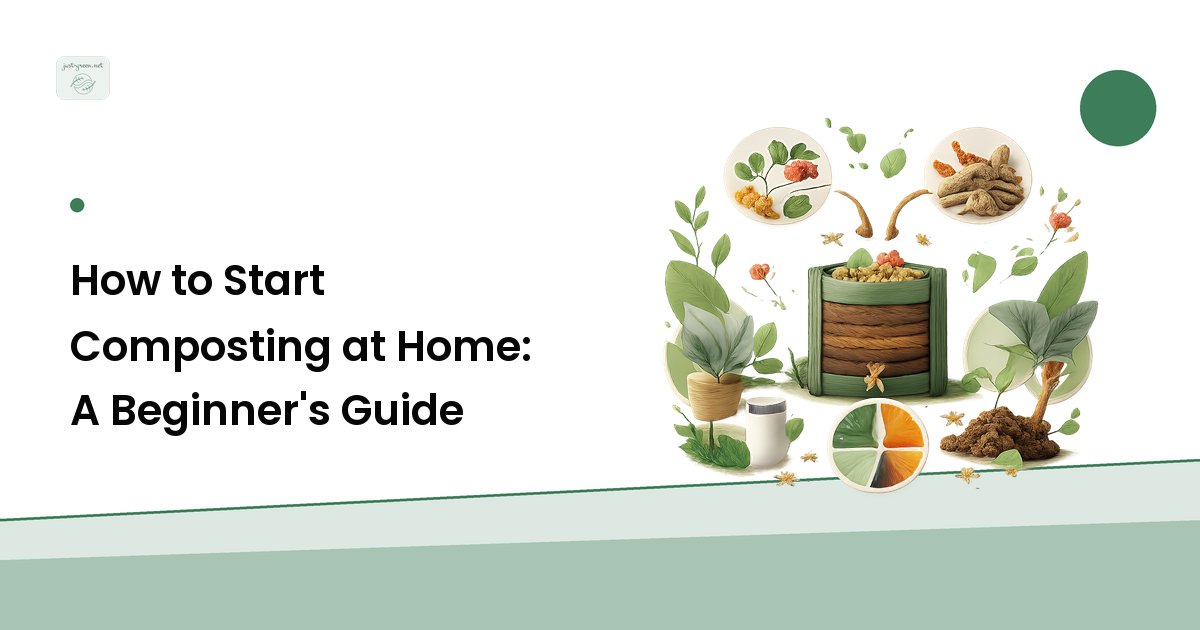
Composting has a reputation for being fussy, smelly, or only for people with big gardens. None of that is true. At its core, composting is just controlled rotting: give food and garden scraps the right mix of air, moisture, and materials, and the microbes do the rest — turning what you'd bin into dark, crumbly soil food for free.
The takeaway up front, and the whole of how to start composting in one line: balance wet "greens" with dry "browns," keep the pile as damp as a wrung-out sponge, and let air in. Get that balance right and compost barely smells and needs little work. Get it wrong and it goes slimy or stalls — but every problem is fixable in a day. This guide covers choosing a method for your space, what to add and avoid, the greens-and-browns balance that makes the whole thing work, and how to fix the handful of issues everyone hits.
Why composting is worth the small effort
Food scraps buried in landfill break down without oxygen and give off methane, a greenhouse gas far more potent than carbon dioxide. Compost the same scraps with air instead and they break down into a stable material you can actually use — no methane, no bin-juice heading to landfill.
The payoff is practical, not just principled. Finished compost is a genuinely useful soil amendment: mixed into any soil it improves structure, feeds soil life, and helps the ground hold water instead of shedding it. And because food waste is usually the single biggest stream in a household bin, diverting it is one of the highest-impact moves in a broader plan to reduce household waste.
The honest trade-off: composting takes a bit of space, a few minutes a week, and patience measured in weeks to months rather than days. It won't happen instantly, and it isn't magic. But once a system is running, it's close to self-maintaining — you feed it and occasionally turn it.
Choose the method that fits your space
There's no single "best" bin — the right one depends on whether you have a yard, a balcony, or just a kitchen. Match the method to your space and you'll actually keep it up.
| Method | Best for | Why | Watch-out |
|---|---|---|---|
| Open heap or bin | Yards | Cheapest, biggest capacity | Slower unless you turn it |
| Tumbler | Small yards, patios | Enclosed, rodent-resistant, easy to turn | Costs more; limited volume |
| Worm bin (vermicompost) | Balconies, flats | Compact and fast on kitchen scraps | Worms need care; no meat or excess citrus |
| Bokashi bucket | Any indoor space | Ferments all food, including meat and dairy | Output is pre-compost, not finished |
| Council/community collection | No time or space | Easiest of all where offered | Only where your area provides it |
Two notes worth flagging honestly. A worm bin is the workhorse for apartments, but the worms (usually red wigglers) are livestock — keep them damp, shaded, and don't overload them, or they die off. Bokashi is often sold as composting, but it's really fermentation in a sealed bucket; it handles meat and dairy that other home systems can't, yet what comes out is pickled "pre-compost" that still has to be buried in soil or added to a compost pile to finish. Neither is a flaw — just know what you're signing up for.
The one rule that makes compost work: greens and browns
Almost every composting problem traces back to one imbalance, so this is the part to actually understand.
- Greens are wet and nitrogen-rich: fruit and veg scraps, coffee grounds, fresh grass clippings, spent plants.
- Browns are dry and carbon-rich: dead leaves, shredded cardboard and paper, straw, wood chips, sawdust from untreated wood.
Aim for roughly two to three parts browns to one part greens by volume. Too many greens and the pile turns wet, slimy, and smelly. Too many browns and nothing happens — it just sits there and dries out. Browns are the ones people forget, so when in doubt, add more.
The practical version of the rule: every time you tip in a scoop of kitchen scraps, cover it with roughly twice as much browns. Keep a stash of dead leaves or shredded cardboard right next to the bin so it's a reflex, not a chore. That single habit prevents most trouble before it starts.
Two other levers keep the microbes happy:
- Moisture — the pile should feel like a wrung-out sponge: damp, not dripping. Add water in dry spells; add browns if it's soggy.
- Air — turn or mix the pile every week or two with a fork. Oxygen is what keeps decomposition sweet-smelling; starve it of air and it goes anaerobic and sour.
What you can and can't compost
A quick checklist for a basic home system. When you're unsure about an item, leaving it out is the safe call.
Add freely:
- Fruit and vegetable scraps, peels, and cores
- Coffee grounds with paper filters, and tea leaves
- Crushed eggshells
- Grass clippings, leaves, plant trimmings, and spent flowers
- Shredded uncoated paper, cardboard, and paper-towel tubes
- Sawdust and wood chips from untreated wood
Leave out of a basic bin:
- Meat, fish, bones, dairy, and greasy or oily food — they attract pests and smell (only sealed hot systems or bokashi handle these)
- Dog and cat waste — can carry pathogens
- Diseased plants and weeds gone to seed — a cool pile won't kill them
- Glossy or coated paper, and "compostable" plastics or packaging — most need industrial facilities, not backyard heat
- Big woody branches — far too slow unless chipped first
Build and maintain it, step by step
- Site it. Put the bin on bare soil in a spot you'll walk past. Contact with the ground lets worms and microbes move in on their own; partial shade keeps it from drying out.
- Start with browns. A base layer of twigs, leaves, or shredded cardboard improves airflow and drainage at the bottom.
- Layer as you go. Add greens and browns together, keeping that two-to-three-to-one lead of browns. Bury fresh food scraps under a handful of browns to deter flies.
- Keep it damp. Check the wrung-out-sponge feel now and then. Water it in dry weather; pile on browns and turn it if it's waterlogged.
- Let air in. Turn or mix every one to two weeks. More turning means faster compost — it's the main dial you control.
Hot versus cold, the trade-off worth knowing: a large pile — roughly a cubic metre — that's kept balanced and turned can climb to around 55–65°C (130–150°F) in the middle and finish in a few weeks to a couple of months, hot enough to kill many weed seeds. A small "add-a-bit-at-a-time" bin stays cool and takes several months up to a year. Both produce good compost. Hot is faster and cleaner but needs bulk and effort; cold is slower but nearly hands-off. Pick the one that matches how much attention you'll realistically give it.
Fix the four problems everyone hits
Nearly every complaint about composting is one of these, and each has a same-day fix.
- It smells rotten or sour. Too wet, too many greens, or not enough air. Mix in a generous helping of browns and turn it. The smell usually settles within a day or two.
- Flies or pests are moving in. Food scraps left exposed, or meat and dairy sneaking in. Bury every addition under browns, keep the lid on, and keep animal products out of an open bin.
- Nothing is happening. Too dry, too many browns, or the pile is too small to get going. Add greens, water it to sponge-damp, turn it, and build up more volume.
- It's a soggy, slimy mess. Waterlogged and airless. Add browns to soak up the excess, turn thoroughly, and cover it from heavy rain.
Notice the pattern: browns and a turn fix the wet, smelly problems; greens and water fix the dry, dead ones. Once you internalise that, troubleshooting is almost automatic.
How to know it's done — and how to use it
Finished compost is dark and crumbly, smells earthy like a forest floor, and the original scraps are mostly unrecognisable. Depending on method and effort, that's anywhere from a few weeks for a hot, turned pile to a year for a cold one. If you can still make out last month's banana peel, give it more time.
Using it is forgiving — you can't really over-apply well-made compost. Mix it into garden beds or potting soil to improve structure and water retention, spread a thin layer around established plants as a top dressing, or sieve the finest of it for starting seeds. Even a modest handful worked into tired soil makes a visible difference over a season.
FAQ
How do I start composting without a garden?
You don't need one. A worm bin fits on a balcony or under a sink and is efficient at eating kitchen scraps; a bokashi bucket ferments food indoors in a sealed container; and a lidded countertop caddy paired with a council food-waste collection keeps scraps out of landfill with no bin at all. Pick whichever suits your space and how much you'll tend it.
Does a compost bin smell bad?
A balanced one barely smells — more earthy than anything. Bad odour is almost always a sign of too much wet green material, too much moisture, or not enough air. The fix is the same each time: mix in dry browns and turn the pile to let oxygen back in.
What is the right ratio of greens to browns?
Roughly two to three parts browns to one part greens by volume. Greens are your wet, nitrogen-rich scraps; browns are dry, carbon-rich material like leaves and cardboard. Browns are the part most people run short on, so when you're unsure, add more of them.
How long does compost take to be ready?
Anywhere from a few weeks to about a year. A large, well-balanced pile that you turn regularly and keep warm finishes fastest; a small, cool bin you simply add to over time is slower. Most home setups land somewhere in the middle, at a few months.
Can I compost in winter?
Yes. Cold weather slows the microbes right down, so decomposition nearly pauses, but it isn't harmed. Keep adding scraps, bulk the pile up so it holds a little warmth, and it will pick back up on its own as temperatures rise.
Can you compost meat, dairy, or cooked food?
Not in a basic open bin — they attract pests and turn smelly. If you want to divert them, use a bokashi bucket, which ferments all food waste in a sealed container, or a sealed hot-composting system designed for it. Otherwise, keep meat, dairy, and oily leftovers out.
Next step
Don't wait for the perfect setup. Start with the smallest version that fits your home: a lidded caddy for food scraps, a jar of shredded cardboard or dead leaves beside it, and whichever bin your space allows. Layer greens with a bit more browns, keep it sponge-damp, and turn it now and then — that's genuinely the whole craft. For more practical, no-greenwashing ways to make your home greener one change at a time, visit Just Green.