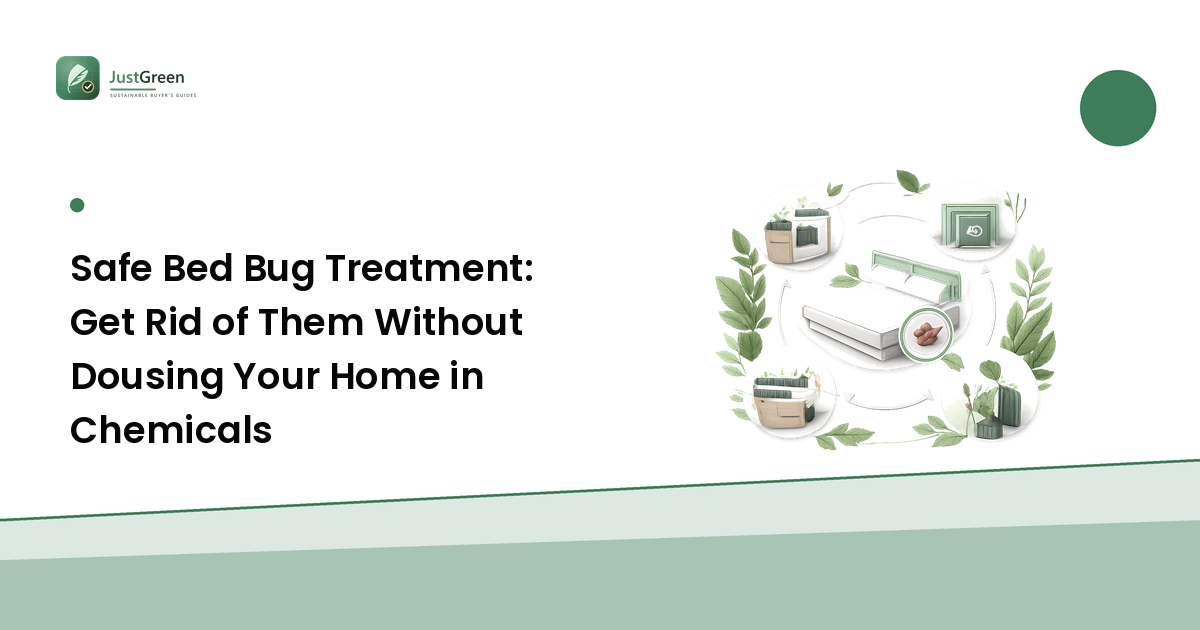
Few household problems trigger the reflex to reach for the strongest chemical on the shelf quite like bed bugs. That reflex is understandable and usually wrong. Fogger cans and hardware-store sprays rarely reach where bed bugs actually live, they scatter the population deeper into the room, and they leave residue on the exact surfaces you sleep against. The takeaway up front: safe bed bug treatment is a sequence, not a single blast. Heat, laundering, physical barriers, and patient monitoring do most of the real work — and when those stall, the fix is trained, targeted treatment, not more chemicals sprayed by hand. This guide walks the low-tox path in order, and is honest about where it ends.
First, confirm it's actually bed bugs
Plenty of bites and specks get blamed on bed bugs when the culprit is fleas, mosquitoes, or dry skin. Before you treat anything, confirm the signs of bed bugs so you don't waste effort on the wrong problem.
Look for the physical evidence, not just bites (bites alone are unreliable — reactions vary hugely from person to person). Check the seams and tags of your mattress, the crevices of the bed frame and headboard, and the edge of the carpet where it meets the wall. You're looking for:
- Small rust or ink-coloured spots on sheets and mattress seams — digested blood the bugs leave behind.
- Pale, translucent shed skins and tiny pale eggs tucked into seams and cracks.
- Live insects roughly the size and colour of an apple seed, flat and reddish-brown.
A torch and a slow, methodical look at 2–3 a.m. (when they're active) tells you more than any spray. If you find nothing near the bed but keep getting bitten, widen the search to the sofa and any upholstered chair you regularly fall asleep in.
The safe DIY steps that actually work
Good news: the most effective early moves are also the least toxic. They rely on heat and physical removal, which bed bugs cannot develop resistance to.
- Heat-treat what you can. Bed bugs and their eggs die at sustained high temperatures. Wash bedding, clothing, and soft items on the hottest cycle the fabric allows, then run them through a hot dryer for at least 30 minutes — the dryer's heat matters more than the wash. For items you can't launder, a sealed bag left in a hot car or direct summer sun can help, though results vary and cold is far slower and less reliable.
- Encase the mattress and box spring. A quality bed-bug-proof encasement traps any bugs inside (where they eventually die) and denies new ones the seams they love to hide in. Leave encasements on for at least a year. This single step turns your bed from a hiding fortress into a smooth, inspectable surface.
- Vacuum, then seal and bin the bag. Vacuum seams, frame joints, and baseboards, then empty the canister straight into a sealed rubbish bag outside. Vacuuming removes live bugs but doesn't kill eggs, so it's a reduction step, not a cure.
- Use diatomaceous earth sparingly. Food-grade diatomaceous earth is a low-tox powder that damages the bugs' outer layer as they crawl through it. A very light dusting into cracks and frame edges is the right amount — a visible pile just makes a mess and irritates lungs. Keep it off surfaces you touch.
- Reduce clutter. Every pile of clothes or cardboard box is extra harborage. Fewer hiding spots means every other step works better.
This "physical-first" approach is the same principle behind a lower-chemical home generally — reach for the least toxic tool that does the job, and use it precisely. If you're rethinking what's under your sink while you're at it, our green cleaning guide covers the same mindset for everyday cleaning.
Myths that waste time — and some that backfire
- "A bug bomb or fogger will clear the room." Foggers mostly coat open surfaces, which is exactly where bed bugs aren't. They can drive the population into wall voids and make later treatment harder, all while leaving pesticide on your sleeping surfaces.
- "Throw out the mattress and it's over." Dragging an infested mattress through the house spreads bugs on the way out, and a new mattress in an untreated room is just a fresh home. Encase first; replace only if it's damaged.
- "Essential oils will kill them." Sprays scented with tea tree or lavender may repel a little at close range but do not reliably kill bugs or eggs. Treating them as a solution lets the infestation grow.
Keeping treatment safe for your family and pets
The whole point of the low-tox route is that you can do it around children and pets. Heat, laundering, encasements, and vacuuming carry essentially no chemical risk. If you use diatomaceous earth, choose food-grade, apply a barely-visible layer into cracks only, and keep pets and kids clear until any dust settles. Never mix pest products, and never spray a chemical onto bedding "to be safe" — that's how residue ends up against your skin all night. If a product's label tells you to leave the room, that instruction applies to your family too.
When DIY isn't enough — and why
Here's the honest part. Bed bugs are one of the hardest household pests to fully eradicate on your own, and it's not about effort. They tuck their eggs deep into cracks, wall voids, and furniture joints a homeowner can't safely reach, and those eggs are shielded from surface treatments. Miss one clutch and the infestation quietly rebuilds. If you've done the heat-and-encasement basics diligently for two to three weeks and still find live bugs or fresh bites, that's the signal to escalate — not to buy a stronger spray.
At that point, professional bed bug treatment in Bangalore (or a licensed provider wherever you live) is the safer choice, precisely because trained technicians locate the harborage and eggs you can't, and apply targeted, correctly-dosed treatment rather than the guesswork of over-the-counter chemicals. A professional inspection also confirms whether the problem is truly gone — the part DIY is worst at judging.
FAQ
Are bed bug treatments safe for my family and pets — and can I just do it myself? The DIY basics here — hot laundering, dryer heat, encasements, vacuuming — are safe around children and pets and effective for early infestations, so yes, start them yourself. The real risk comes from over-the-counter sprays and foggers on sleeping surfaces. If DIY stalls, professional treatment is dosed and placed deliberately by someone trained, which is safer than escalating chemicals on your own.
How long does it take to get rid of bed bugs? Plan for weeks, not days. Even done well, heat treatment and monitoring take two to three weeks to show progress, partly because eggs hatch on a delay. If you're still seeing activity after that, it's time for a professional.
Does a clean home prevent bed bugs? Not directly — they feed on blood, not crumbs, so even a spotless home can get them, usually hitchhiking in on luggage or second-hand furniture. Reducing clutter helps by removing hiding spots, but cleanliness alone is neither the cause nor the cure.
The bottom line
Safe bed bug treatment rewards a calm, physical-first sequence: confirm the signs, heat-treat and launder, encase the bed, vacuum and monitor — all without fumigating the room you sleep in. Give those steps a fair two to three weeks. If you're still finding bugs, don't reach for a stronger chemical; book a professional inspection. For readers in the area, you can book a professional bed bug inspection in Bangalore to reach the eggs and harborage safely and confirm the job is actually done.