In much of California, the single thirstiest thing you own isn't your washing machine or your shower — it's your lawn. Outdoor irrigation swallows a large share of household water in dry regions, and a traditional turfgrass lawn is the hungriest surface in the yard. So when the state cycles back into drought and watering restrictions, the yard is where the biggest, most durable savings hide.
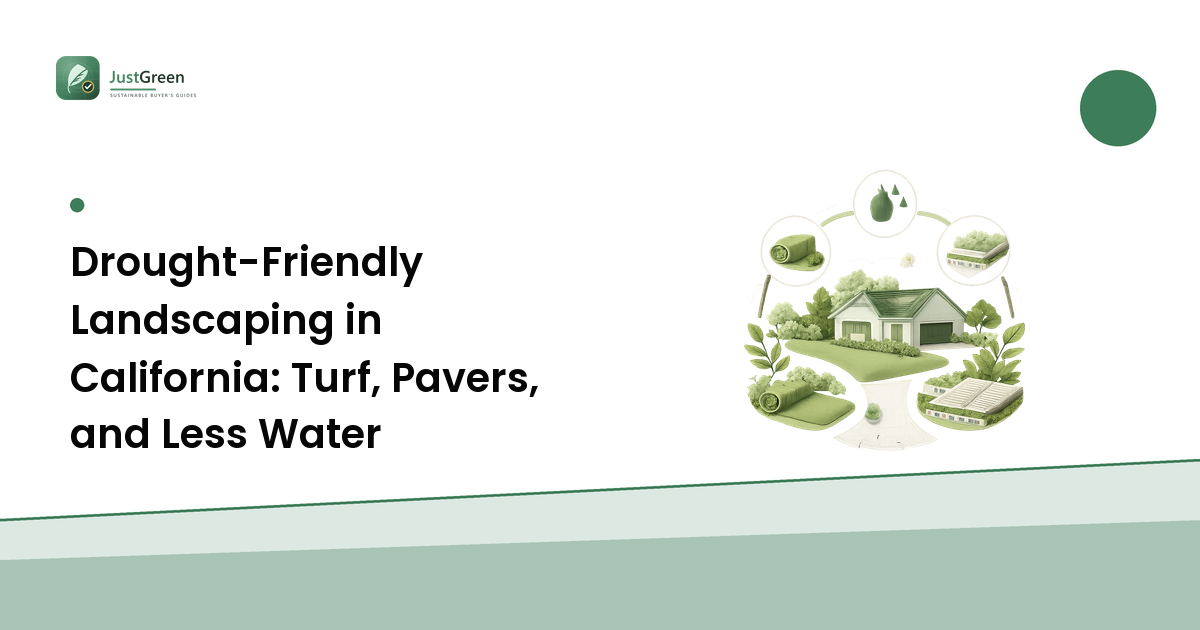
The takeaway up front: the goal isn't a paved-over, plastic yard — it's replacing the high-water surfaces you don't really use with lower-water ones that you do. Two materials come up again and again for this: permeable pavers and artificial turf. Both can cut outdoor water use sharply, both have real trade-offs, and neither is the right answer for every square foot. This guide walks through where each one earns its place, and where it doesn't.
Why the lawn is the problem
A conventional lawn is a monoculture of thirsty grass that needs regular watering through the dry season just to stay green — and in a Mediterranean climate like California's, the dry season is long. Much of that water never does anything useful: it evaporates off hot blades, runs off compacted soil, or overshoots onto the sidewalk. The same find-the-waste-first logic in our garden water guide applies here, just at a bigger scale. The difference is that with hardscape and turf you're not tweaking a habit — you're removing the thirsty surface entirely.
That's also why this is a bigger decision than changing a sprinkler timer. Ripping out a lawn costs money up front and changes how the space looks and feels. It's worth being honest about both the savings and the compromises before you commit.
Permeable pavers: hard surface that still drinks
Permeable (or porous) pavers are interlocking units laid over an open gravel base, with gaps or a porous body that let rainwater soak through the surface and into the ground rather than sheeting off it. You get a usable patio, walkway, or driveway that also lets the ground breathe.
Why they suit a drought-minded yard:
- They replace lawn you were only walking on. Paths, patios, and driveways don't need to be grass. Converting those to hardscape removes irrigated area outright.
- They recharge groundwater instead of shedding it. Conventional concrete sends every drop of rain to the storm drain. Permeable systems let winter rain percolate down toward the water table — the water you'll want back in summer.
- They cut runoff and pooling. Because water drains through rather than across, you get fewer puddles and less erosion, and you keep rainfall on your own property.
Honest trade-offs: pavers cost more up front than a poured slab, the joints need occasional sweeping or refilling to stay porous, and a permeable system only performs if the base is built correctly — this is not the place to cut corners on the gravel and drainage layer underneath. Done poorly, a permeable driveway clogs and behaves like ordinary concrete.
Artificial turf: green without the watering
Synthetic turf gives you a green, walkable surface with essentially no irrigation once it's installed. For a play area, a pet run, or a small front lawn you want to look like grass without the hose, it's a genuine water-saver — and it stays green through a dry summer when a real lawn would go brown or die.
But this is exactly where the no-greenwashing rule matters, because artificial turf is often oversold. The real trade-offs:
- It's plastic. Turf is a petroleum product with a finite lifespan (typically many years, then replacement), and at end-of-life it's difficult to recycle. That's a real environmental cost against the water it saves.
- It gets hot. Synthetic turf can heat up well beyond air temperature in direct sun, making it uncomfortable underfoot on hot afternoons — worth weighing in California's inland valleys especially.
- It does nothing for pollinators or soil. A living low-water landscape of native and drought-tolerant plants feeds insects and builds soil; turf doesn't. It saves water but it isn't "nature."
- It still needs some care. Rinsing, brushing, and clearing debris keep it usable, particularly with pets.
Where turf makes the most sense is the small, high-traffic, hard-to-grow patch — not the whole yard. For larger areas, a mix of permeable hardscape and climate-appropriate planting usually gives you a lower-water yard that's also more alive.
Putting it together for a California yard
A practical low-water landscape rarely picks just one material. A common, sensible layout: permeable pavers for the surfaces you use (patio, path, parking), a modest patch of artificial turf only where you need a soft green surface, and drought-tolerant or native plants — with mulch and drip irrigation — filling the rest. That combination removes most of the irrigated lawn while keeping the yard usable and green where it counts.
If you're in the Bay Area — around Livermore and the Tri-Valley, say — and you'd rather have this done properly than improvise it, a regional landscaping and hardscaping specialist like Pavers and Turf by O'Neill's is worth a look, for one specific reason: permeable paver systems and turf both live or die on the base preparation and drainage underneath, and a local installer who knows the area's soils and water rules is better placed to build that correctly than a generic contractor. Get one small area quoted first — the thirstiest strip of lawn — and see how the numbers and the finish look before committing the whole yard.
FAQ
Does artificial turf really save water?
Yes — once installed, synthetic turf needs essentially no irrigation, so it removes one of the yard's biggest water uses. The honest caveat is that it's plastic with a limited lifespan and it heats up in sun, so it's best used for small, high-use areas rather than as a whole-yard replacement for living landscape.
Are permeable pavers better than concrete for drought?
For a dry climate, generally yes. Permeable pavers let rainwater soak into the ground and recharge groundwater instead of running off to the storm drain, and they reduce pooling and erosion. They cost more up front and need the joints kept clear, but they keep more of your winter rain on your own property.
Is replacing my lawn worth the cost?
The lawn is usually the single biggest outdoor water user, so replacing the parts you don't actively use often pays back over time through lower water bills, especially under drought pricing or restrictions. Start by converting the thirstiest, least-used areas first rather than doing the whole yard at once.
What's the greenest low-water option overall?
For living, pollinator-friendly ground, drought-tolerant and native planting with mulch beats both pavers and turf environmentally. Use permeable pavers for surfaces you walk or park on, and reserve artificial turf for the specific spots where you need a soft green surface nothing will grow on.
Next step
A drought-friendly yard isn't about paving paradise — it's about matching each surface to how you actually use it: hardscape where you walk, a little turf where you need green underfoot, and living plants for the rest. Decide which patch of lawn wastes the most water and start there. If you want the paver-and-turf portion built to last in the Bay Area, get a small area quoted with Pavers and Turf by O'Neill's before you commit the whole yard — measure the saving on one area, then scale what works.